Your Face Is Lying: How the Camera Catches What Characters Try to Hide
There's a moment in almost every great film where you know something is wrong before you can explain why. The character is saying the right words. The music isn't doing anything suspicious. The scene looks perfectly ordinary. And yet your gut has already filed a report: this person is not telling the truth.
That feeling isn't accidental. It's the result of a director, a cinematographer, and an actor working in quiet conspiracy — using the human face as a kind of lie detector that the audience can read without ever being told what to look for.
The Face Has a Terrible Poker Game
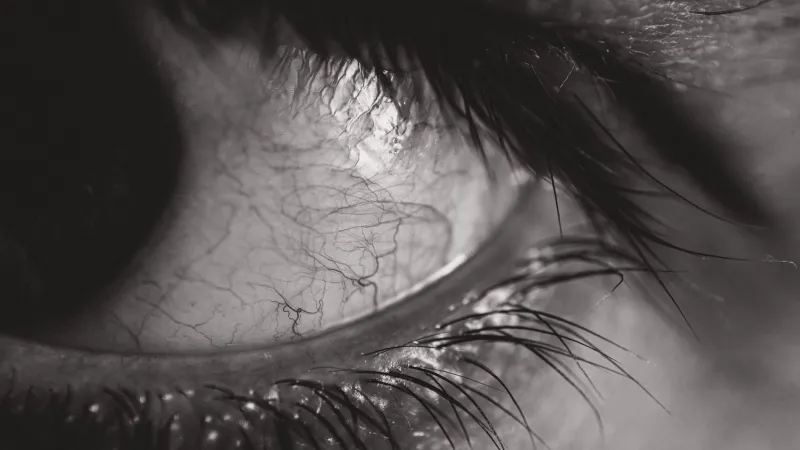
Human beings are wired to detect emotional incongruence. We've been reading faces since before we had language for it. What psychologist Paul Ekman famously catalogued as "micro-expressions" — those involuntary flickers of real emotion that cross a face in less than a fifth of a second — are the raw material that skilled actors and directors weaponize constantly.
The catch is that most of us don't consciously register what we've seen. We just feel uneasy. We lean forward slightly. Something about the scene won't let us fully relax. That low-grade tension is the whole game.
Directors who understand this don't just shoot a scene and hope for the best. They engineer the conditions under which a face will betray itself. That means lingering on an actor a half-beat longer than feels comfortable, choosing a focal length that makes escape impossible, and trusting that the camera will find what the character is trying to bury.
The Telltale Beat
Think about the interrogation scenes in Prisoners (2013). Hugh Jackman's Keller Dover is supposed to be a grieving father — and he is — but Denis Villeneuve's camera keeps catching something else underneath the grief. A flash of calculation. A moment where the eyes go somewhere they shouldn't. Roger Deakins shoots Jackman in merciless light, and the result is a character who reads simultaneously as victim and perpetrator long before the plot confirms anything. You don't know what you're seeing. You just know you're seeing something.
Or consider Cate Blanchett in Carol (1955). Every public scene she plays as composed, controlled, socially correct. But Todd Haynes keeps letting the camera idle on her just a moment after she's "finished" performing composure. And in that extra beat, something crosses her face — a kind of hunger, or exhaustion, or relief — that the character absolutely did not intend for anyone to witness. The audience catches it. And the film becomes twice as rich because of it.
The Involuntary Admission
What makes micro-expressions so potent cinematically is that they operate on a different register than acting. The best screen performances involve actors who can think their way into a moment so completely that their face does something unscripted — something their character wouldn't choose to show.
Joaquin Phoenix has built an entire career on this. Watch him in The Master (2012). Freddie Quell is volatile, dangerous, barely contained — and yet there are moments, especially in the processing scenes with Philip Seymour Hoffman, where Phoenix's face goes briefly, startlingly soft. A flicker of something almost childlike. It lasts maybe two frames. Paul Thomas Anderson doesn't cut away from it. He lets it sit. And suddenly you understand everything about why this broken man keeps coming back to a cult he half-believes in.
That's the involuntary admission. The thing the character cannot afford to feel, flickering across their face anyway.
Why the Close-Up Is a Trap
Here's where it gets interesting from a craft perspective: the close-up is not just a tool for revelation. It's also a trap for actors who aren't operating at full depth.
When a camera moves in tight on a face, it's essentially asking: is there anything real happening behind here? A performer who's working only on the surface — hitting marks, delivering lines, managing external expression — will look hollow under that kind of scrutiny. The close-up exposes the gap between what a character is saying and what the actor is actually thinking.
This is why certain scenes in otherwise competent films feel strangely unconvincing. The dialogue is fine. The blocking is fine. But something about a held close-up makes you feel like you're watching someone perform honesty rather than actually be honest. Your brain, trained by thousands of hours of face-reading, clocks the absence of something real underneath.
Conversely, when an actor is genuinely inhabiting a moment of concealment — when they're actively working to hide something within the scene's logic — the close-up becomes revelatory in a completely different way. The suppression itself becomes visible. And that visible suppression is more interesting than almost anything a script can hand you.
The Director's Conspiracy
None of this happens by accident. Choosing to hold on a face, choosing the exact moment to cut, choosing a lens that flattens space and removes the actor's ability to hide in depth — these are all deliberate decisions that either create the conditions for revelation or shut them down.
Steven Spielberg does this brilliantly in the courtroom scenes of Bridge of Spies (2015). Mark Rylance plays Rudolf Abel as a man who has made peace with his own death — and Spielberg keeps returning to his face during moments when the camera has no narrative reason to be there. Abel isn't speaking. He's not reacting to anything in particular. He's just present. And in that presence, Rylance does something almost impossible to describe: he lets you see a man deciding, moment by moment, not to be afraid. It's not a speech. It's not a gesture. It's just a face, and it's devastating.
What You Sensed Was Real
The next time a film makes you uneasy about a character before you have any logical reason to be, trust that instinct. Something flickered across a face in a frame you barely registered. A director made a choice to stay on that face one beat longer than politeness required. An actor let something through that their character was working hard to contain.
You didn't imagine it. You caught it.
That's the whole strange contract between cinema and the human nervous system — the reason a well-placed close-up can do in two seconds what three scenes of exposition cannot. The face, under the right conditions, simply cannot lie. And the best films in the world are built on that beautiful, irreducible fact.