Light as a Blunt Instrument: The Strobing Effect's Rise From Gimmick to Genuine Provocation
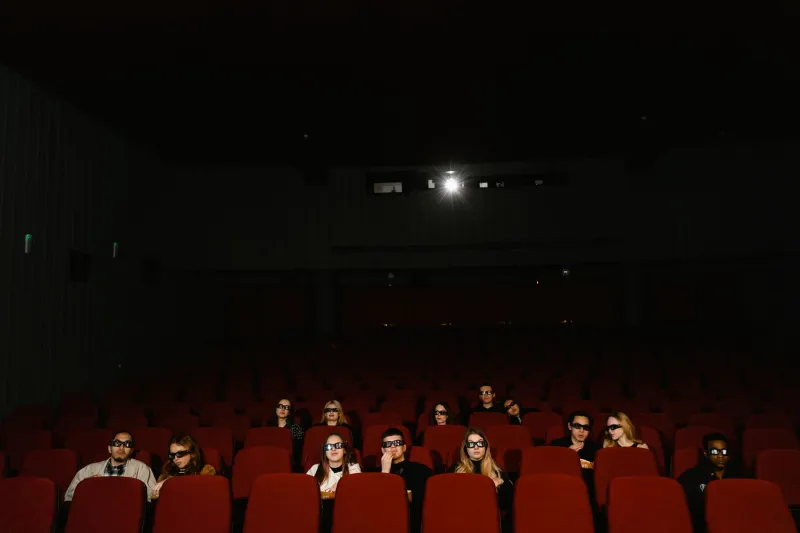
There's a moment in certain films where the screen stops being a window and starts being a weapon. You're sitting in a darkened theater, maybe with a soda in your hand, and then the light begins to pulse — rhythmically at first, then erratically, then almost violently — and something inside your body responds before your brain has a chance to process what's happening. Your pulse quickens. Your vision swims. You grip the armrest without quite deciding to.
That's not an accident. That's a director pulling a lever they know exactly how to operate.
Strobing and rapid light fluctuation have become one of cinema's most contested tools. Not because they're new — flickering light has been part of the filmmaking vocabulary since the silent era — but because a growing wave of directors is pushing the technique past the point of atmospheric suggestion and into territory that's genuinely, physically confrontational. The question the film community is increasingly asking isn't whether strobing works. It's whether working is always the same thing as being justified.
A Brief and Uneasy History
Cinema and flickering light have always been inseparable. The very word flickerings captures something essential about what movies are at their most elemental — projected light interrupted at regular intervals, creating the illusion of movement. Early audiences were reportedly unsettled by the flicker of silent films, a phenomenon researchers later connected to the way certain frequencies of light interact with the human nervous system.
Hollywood largely smoothed that roughness out over the decades. The industry standardized frame rates, refined projection technology, and worked hard to make the viewing experience as frictionless as possible. But some filmmakers noticed something in what got sanded away. The discomfort wasn't a flaw. It was information.
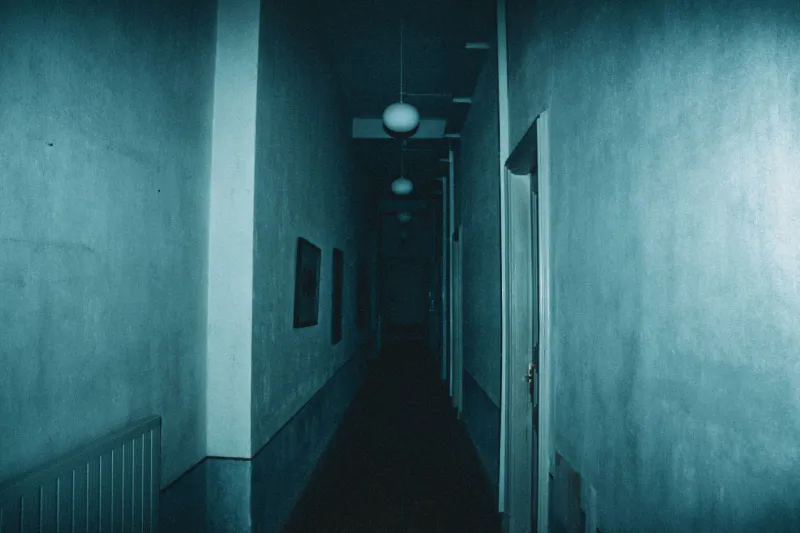
By the 1970s and 1980s, horror directors were deliberately reintroducing flicker as a tool of dread. Strobe lights became shorthand for haunted spaces, demonic possession, industrial nightmares. The effect was crude but effective — audiences associated the pulsing light with danger, disorientation, the breakdown of the safe and the known.
When the Flicker Becomes the Point
What's changed in recent years is the level of intentionality. Directors aren't just using strobing as set dressing anymore. They're deploying it as a primary storytelling mechanism — a way of forcing the audience into the same psychological state as the character onscreen.
Consider how certain horror films have used rapid light fluctuation not to signal that something scary is about to happen, but to make the audience feel the thing that's already happening to the protagonist. When a character is in the grip of a seizure, a dissociative episode, or a supernatural encounter, the camera doesn't just observe — it participates. The screen itself becomes unreliable. You can't trust what you're seeing, which means you can't trust anything.
Darren Aronofsky has built much of his visual language around this kind of physiological pressure. The strobing and fragmented editing in Requiem for a Dream aren't just stylish — they're designed to make addiction feel like something happening to you, not something you're watching from a safe distance. The discomfort is the argument.
Similarly, Gaspar Noé's work — particularly Enter the Void and Climax — uses light as a battering ram. His strobing sequences are so intense that some screenings have included verbal warnings before the film even starts. Whether you find his approach visionary or reckless probably says something about where you stand on the question of what cinema is allowed to demand from its audience.
The Warning Label Problem
Here's where the conversation gets genuinely complicated. Strobing light at certain frequencies can trigger photosensitive epileptic seizures in roughly 1 in 4,000 people — a number that sounds small until you're doing the math on a wide theatrical release. Studios and filmmakers have long been aware of this. The UK's Harding Test has been a standard tool for broadcast media since the 1990s. But theatrical film has historically operated with far less formal oversight.
The epilepsy community has pushed back against films that include extended strobe sequences without adequate warning — and their concerns are legitimate and serious. Several high-profile releases in recent years have generated real controversy on this front, with advocacy groups pointing out that a content warning buried in the credits or on a ticketing website isn't the same as meaningful accessibility.
What makes this debate hard to resolve cleanly is that the filmmakers most committed to strobing as an artistic tool tend to be the ones least interested in diluting its impact. A warning label changes the experience. If you know the strobe is coming, your body prepares differently. The ambush is gone. For directors who believe the ambush is the whole point, that's not a minor compromise — it's a fundamental one.
Mainstream Cinema Catches the Fever
What's notable is how far this technique has migrated from the arthouse fringe into mainstream genre filmmaking. Recent horror releases — the kind playing at your local multiplex on a Friday night, not at a film festival — have incorporated strobe sequences that would have felt extreme even in experimental contexts a decade ago. The audience for these films skews younger, more casual, less likely to have researched the film's visual approach before sitting down.
This is where artistic intent and audience reality start to pull in different directions. A Gaspar Noé film attracts a self-selecting crowd that has at least some sense of what they're walking into. A wide-release horror film with a PG-13 rating and a recognizable cast does not carry the same implicit contract.
The question isn't whether strobing is a legitimate artistic choice. It clearly is. The question is whether the conversation around it — the warnings, the accessibility accommodations, the transparency — has kept pace with how aggressively the technique is now being used.
What the Flicker Actually Does
Strip away the ethics debate for a moment and just look at the craft. When strobing works, it works because light is one of the few things cinema can use to reach past your interpretive brain and land directly in your nervous system. You don't decide to feel disoriented by a strobe effect any more than you decide to feel warm when sunlight hits your face. The response is involuntary, which makes it extraordinarily powerful as a storytelling tool.
The best uses of the technique understand this and use it with precision. A strobe that lasts three seconds in an otherwise naturalistic film carries enormous weight. It marks a rupture — a moment where the world of the film has broken down in some fundamental way. When directors extend that rupture for minutes at a time, they're making a different bet: that sustained physical discomfort will deepen the emotional experience rather than simply exhaust it.
Sometimes that bet pays off. Sometimes it just gives you a headache.
The Honest Reckoning
Cinema has always been in the business of controlled discomfort. Jump scares, graphic violence, emotionally devastating narrative turns — none of these are comfortable, and we accept them as part of the deal. Strobing light is different in one specific way: it operates below the level of narrative. You don't need to be emotionally invested in the story for a strobe sequence to affect you. It's happening to your body whether you're engaged or not.
That's what makes it genuinely polarizing in a way that most other cinematic techniques aren't. It's not just a question of taste or tolerance. It's a question of consent — of what we've agreed to when we buy a ticket and sit down in the dark.
The flicker has always been at the heart of what movies are. What we're working out right now, in real time, is how much of that original discomfort we actually want back.