You Already Scared Yourself: The Empty Space Where Horror Really Lives
Here's something worth sitting with: the most terrifying thing a horror film can show you is absolutely nothing.
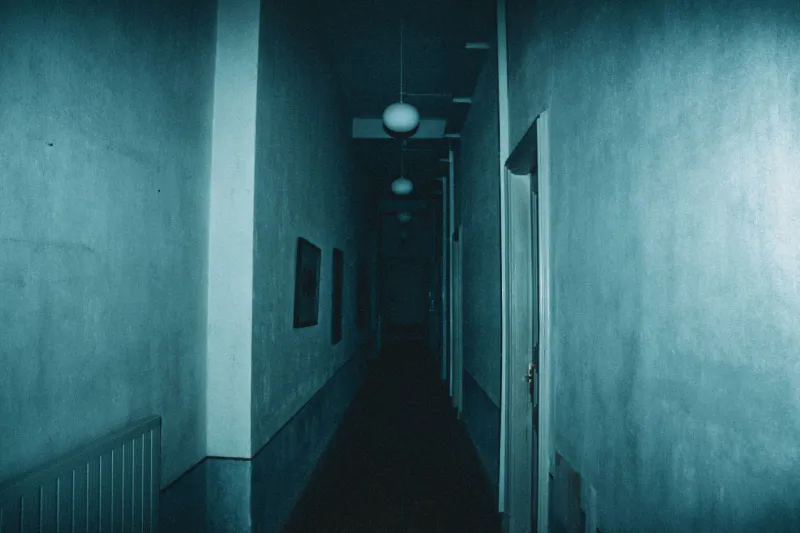
Not darkness. Not a shadowy shape. Not even a sound. Just a hallway. A doorway. A corner of a room that hasn't done anything yet — and somehow that's the part that makes you want to crawl out of your own skin.
This is the gap. The psychological real estate between the moment you know something bad is coming and the moment it actually arrives. And for decades, the best horror filmmakers alive have been quietly building entire careers out of exploiting it.
Your Brain Is the Monster
Human brains are genuinely terrible at uncertainty. We're wired to fill empty space with pattern, with threat, with worst-case scenarios dressed up as premonition. Horror directors don't create fear so much as they create the conditions for fear — then step back and let your nervous system do the heavy lifting.
Think about the first time you watched Hereditary. Ari Aster doesn't rush anything. He holds on rooms just a beat too long. He lets his camera sit in corners of the frame where nothing is happening — yet. And because nothing is happening, you start populating those corners yourself. By the time anything actually moves in that film, you've already been living in a state of low-grade dread for so long that your body has essentially pre-loaded the terror. The reveal isn't the scare. The wait was.
Robert Eggers works a similar kind of alchemy, though his ingredients are different. The Witch is practically built out of sustained atmospheric pressure. There's a sequence early in the film — just the woods at the edge of the farm, static, grey, barely moving — that somehow feels more menacing than most horror films' climaxes. Eggers understands that dread is cumulative. Every quiet moment is a deposit into an account that will eventually pay out in pure panic.
The Geometry of Anticipation
What these directors are doing, technically speaking, is manipulating the geometry of your attention. A long, empty corridor isn't just a set piece — it's a question. What's at the end of it? A door that won't open isn't just a plot obstacle — it's a promise. Something is on the other side.
The camera becomes a co-conspirator. When it lingers on a space, it's essentially telling you: this matters, pay attention here. And once you're paying attention, the imagination engine kicks into overdrive. You're not watching a movie anymore. You're projecting one — your own private horror film, starring your deepest anxieties, playing out in the empty pixels between what's shown and what's implied.
John Carpenter knew this better than almost anyone. The original Halloween is a masterclass in negative space. Michael Myers is terrifying not because of what he does in those early scenes, but because of how long he simply stands there. Across the street. In the backyard. In the doorway. The Shape is almost motionless for long stretches, and that stillness is unbearable in a way that frantic action never could be.
What We've Lost in the Rush
Modern mainstream horror has, in a lot of cases, abandoned this gap almost entirely. Jump scares — loud, sudden, over in half a second — have become the dominant grammar of the genre. And there's an argument to be made for them: they're efficient, they're crowd-pleasing, they reliably get people to spill their popcorn.
But here's the thing about jump scares. They're over. The moment the loud noise hits and the thing pops into frame, the tension collapses. You laugh, you grab your friend's arm, your heart rate spikes and then immediately drops. It's a sugar rush. It hits fast and it's gone fast.
The gap, by contrast, is slow-burning and cumulative. It metabolizes differently. When a film makes you dread what might be in that closet for ten full minutes, the payoff — whatever it turns out to be — carries the weight of everything you imagined. You've been terrifying yourself this whole time. The movie just handed you the raw materials.
The shrinking of this gap in modern horror isn't purely laziness, to be fair. Streaming has changed viewing habits in ways that affect pacing. When audiences are watching on phones, on laptops, in bright rooms with a million distractions, a sustained slow burn is harder to pull off. Directors are working against fractured attention spans in a way that Carpenter and Kubrick simply weren't.
The Directors Still Doing It Right
But the gap hasn't disappeared entirely. It's just migrated to a specific corner of the genre — the films critics call "elevated horror" (a term that's a little snobbish but isn't totally wrong).
Mike Flanagan has made a career out of it. His work — The Haunting of Hill House, Midnight Mass, Oculus — operates almost entirely in the space of sustained unease. His scares, when they finally arrive, feel earned in a way that's almost old-fashioned. He lets you wait. He lets you wonder. He trusts you to be scared before he gives you anything to be scared of.
David Robert Mitchell's It Follows is another example. The threat in that film is almost always at a distance, always approaching at a walking pace. Never rushing. The horror is entirely in the watching — in scanning every corner of the frame, every background figure, waiting for one of them to be it. The film literally trains you to terrify yourself.
The Frame Before the Frame
What all of this points to is something fundamental about how cinema works at its best. A film isn't just what's on screen — it's what you bring to the screen. The gap between dread and revelation is the space where the audience becomes an active participant rather than a passive viewer. You're not just watching. You're completing the horror.
That's the flickering magic of the best scary movies. They know that the most powerful image in any frame is the one that hasn't appeared yet — the one you're already building in your head, assembled from every fear you've ever carried into a dark room.
The monster, when it finally comes, is almost always a little less terrifying than what you imagined. That's not a flaw. That's the point. The real scare already happened. You did it to yourself. The movie just held the door open.