Pixel Decay: Why Streaming's Ugly Glitches Are Accidentally Making Movies More Beautiful
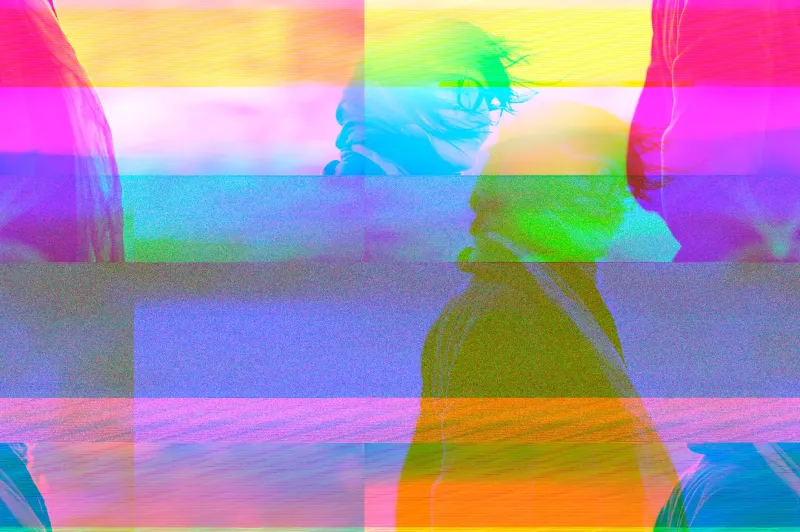
There's a moment buried in a late-night streaming session that most people have experienced and almost nobody talks about. The picture stutters. A face fractures into blocky color squares. Motion smears like a watercolor left in the rain. You reach for the remote to restart the buffer — and then you stop. Because for just a second, that broken image looked like something.
Not broken. Not wrong. Weirdly, uncomfortably right.
Welcome to the accidental art gallery of digital decay, where the least glamorous corner of modern cinema — compression artifacts, bandwidth throttling, codec failures — is quietly producing some of the most visually arresting moments in contemporary film watching. Whether anyone intended that or not is a whole other conversation.
The Compression Problem Nobody Wanted to Solve
Here's the unglamorous truth about streaming: every major platform is making constant, automated decisions about how much visual information your screen actually needs at any given moment. Netflix, HBO Max, Disney+ — they're all running algorithms that strip away data during what the system judges to be "low complexity" scenes. Dark rooms. Slow pans. Faces in shadow.
The problem is that "low complexity" to a compression algorithm often means "high emotional weight" to a filmmaker. Those quiet, still, dimly lit moments that directors use to build dread, grief, or intimacy are precisely the scenes most vulnerable to artifact. The codec doesn't know it's destroying the most important shot in the movie. It just sees pixels it thinks it can afford to lose.
What's left behind is something strange. Macroblocking — those chunky digital squares that emerge when compression pushes too hard — can make a character's face look like a mosaic, a shattered stained-glass version of a human expression. Motion blur from low-bitrate playback can turn a slow walk down a hallway into something that resembles a Francis Bacon painting more than a movie frame.
When Accident Meets Intention
The interesting shift happening right now is that some filmmakers aren't just tolerating this — they're paying attention to it. A handful of directors working in horror, arthouse, and experimental genres have started incorporating deliberately degraded aesthetics into their visual language, partly because they've noticed what streaming compression does to certain kinds of footage and decided to lean into it rather than fight it.
Think about the visual grammar of contemporary horror. Grainy, low-resolution, washed-out imagery has been a genre staple since the found-footage boom of the early 2000s. But there's a newer texture emerging — one that doesn't look like VHS or 16mm film grain. It looks like a bad stream. Blocky. Jittery. Temporally unstable. And it's landing differently on audiences who grew up watching video calls drop and YouTube buffers spin. This isn't the nostalgic decay of old media. It's the familiar decay of right now.
Films like Skinamarink (2022) pushed lo-fi degradation to its logical extreme, and audiences responded not with frustration but with a particular kind of dread that pristine cinematography couldn't manufacture. Part of what makes that film so unsettling is that it looks like something is wrong with your television. It colonizes the anxiety you already carry about broken technology.
The Viewer's Role in the Glitch
There's a participatory dimension to all of this that traditional film theory doesn't quite account for. When a compression artifact appears in the middle of a tense scene, the viewer's brain doesn't always clock it as a technical failure. Especially in genre films — horror, thriller, psychological drama — the glitch gets absorbed into the emotional atmosphere of the moment. Your nervous system is already primed for something to go wrong. The pixelation feels like a symptom of the film's reality cracking, not your ISP having a bad night.
This is actually a documented phenomenon in how we process media. Context shapes interpretation at a pretty fundamental level. A smeared, blocky image during a romantic comedy feels like an annoyance. The same artifact during the climax of a ghost story feels like the film is haunted. Same technical error. Completely different experience.
Some viewers have started actively seeking out these moments — screenshotting and sharing compression artifacts that land in aesthetically interesting ways, treating them like found art. There are corners of film Twitter and Reddit where glitched frames get passed around with genuine appreciation, discussed the same way you might discuss a particularly striking shot composition. The line between error and aesthetic has gotten genuinely blurry.
What This Says About How We Watch Now
Streaming didn't just change where we watch movies. It changed the material conditions of the image itself. For most of cinema history, a film print was a film print. The image you saw in a theater in Chicago was chemically identical to the one in Houston. Degradation happened slowly, over years of projection, and it happened the same way to every print.
Digital streaming is different. The image you see is dynamically generated based on your connection speed, your device's processing power, the platform's current server load, and a dozen other variables that fluctuate in real time. Two people watching the same film at the same moment can be seeing genuinely different images. That's a radical shift in what it even means to watch a movie together — and it means the "text" of a film is, in a very real sense, unstable.
For some critics and theorists, this is alarming. The director's intended image is being compromised by infrastructure. For others, it's just the latest chapter in cinema's long history of technical mediation — film always looked different depending on the projector, the print, the theater's screen. The glitch is just a new kind of grain.
The Flickering Has Always Been There
Maybe what's most interesting about the digital artifact moment is what it reveals about our relationship to imperfection in cinema. We've always been watching flickering light — that's literally what projection is, frames strobing fast enough to trick the eye into seeing motion. Cinema was born in technical imperfection and has been chasing the illusion of seamlessness ever since.
The compression glitch is just the latest reminder that the illusion is always incomplete. The frame is never fully stable. And sometimes, in the fracture between what the image is supposed to be and what bandwidth actually delivers, something genuinely unexpected shows up — a texture, a mood, an accident that no cinematographer planned and no director approved.
And sometimes, it's the most haunting thing in the whole film.
That's not a bug. That's cinema doing what it's always done — finding ways to get under your skin through means nobody entirely controls.