Never Trust a Pair of Eyes: How Directors Use the Gaze to Keep You Guessing
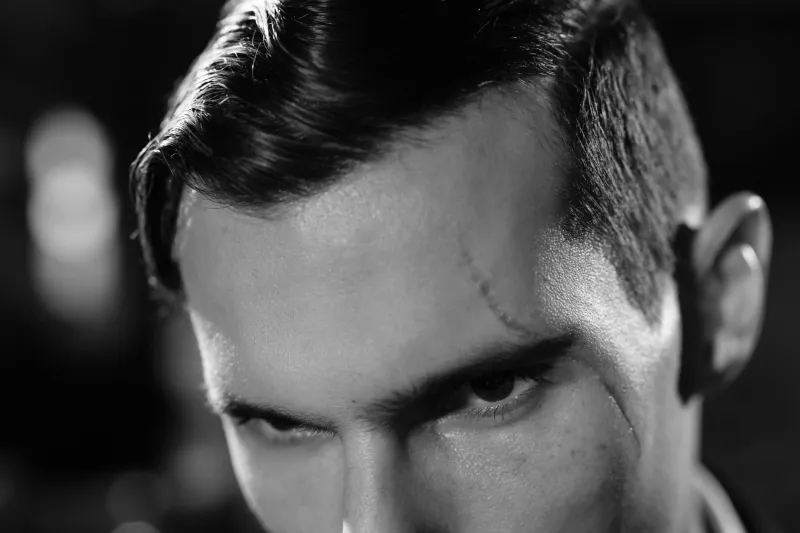
There's a moment in almost every great psychological thriller where something feels off — not because of the music, not because of what's said, but because of where someone's eyes land. Or more precisely, where they don't. It's a trick so subtle most audiences absorb it without ever naming it, and that's exactly the point. The gaze is cinema's quietest lie detector, and the best directors have been rigging it for decades.
Eye contact in real life carries enormous social weight. We trust people who look us in the eye. We get nervous around people who won't. We read guilt, desire, fear, and deception all through the eyes before a single word gets spoken. Filmmakers know this. They've always known it. And they use that deeply wired human instinct against us whenever it suits them.
The Look That Tells You Nothing — On Purpose
Consider how often a character in a thriller is filmed looking just past the camera, or slightly off-axis from whoever they're supposed to be addressing. It registers as a flicker of wrongness — something your brain flags without fully processing. Directors like David Fincher have built entire visual grammars around this kind of subtle misalignment. In Gone Girl, Nick Dunne (Ben Affleck) is frequently shot in ways that make his eye line feel slightly disconnected from the people he's talking to. It's not accident. It's architecture. You're being primed to distrust him before you've consciously decided to.
This technique works because human beings are extraordinarily sensitive to gaze direction. Studies in cognitive psychology have shown that we detect even tiny deviations in where someone is looking — fractions of a degree — and assign meaning to them automatically. Cinematographers exploit this by placing actors in subtle visual tension with their environment, creating an unease that audiences feel in their gut long before the plot gives them a reason to.
When the Camera Becomes the Liar
Sometimes it's not the character's eyes that mislead — it's the camera's relationship to them. Point-of-view shots are supposed to be a contract with the audience: you are seeing what this person sees. But unreliable narrator films have a long history of breaking that contract quietly, showing us POV shots that, in retrospect, couldn't have belonged to who we assumed.
Black Swan does this with particular cruelty. Darren Aronofsky frequently positions the camera behind Nina (Natalie Portman), following her gaze rather than sharing it. We're voyeurs, not participants. When Nina does make direct eye contact — with her reflection, with rival dancers, with her mother — those moments carry a jolt of intimacy that the rest of the film deliberately withholds. The gaze becomes currency. Its presence or absence signals how far inside Nina's reality we actually are.
And then there's the knowing look — the glance that, on a second viewing, reveals the whole con. Think of Kevin Spacey's final moments in The Usual Suspects, or the layered expressions in Knives Out when Marta processes information the audience doesn't yet have. These aren't just good acting moments. They're directorial decisions about when to let a character's eyes speak a language the audience can't yet decode.
The Averted Gaze as Confession
One of the most reliable signals in cinema — and in life — is the refusal to meet someone's eyes. But movies have taught us to read that refusal in multiple directions. Guilt looks away. So does grief. So does love that hasn't been admitted yet. The best films weaponize that ambiguity.
In No Country for Old Men, Javier Bardem's Anton Chigurh holds eye contact with terrifying steadiness — a choice that makes every other character's averted gaze feel like surrender. The Coen Brothers understand that in a film built around fate and inevitability, the eyes are the site of moral confrontation. Who holds the gaze and who breaks it tells you everything about power, will, and who's already accepted their outcome.
Comedy uses the same mechanics in reverse. The character who can't stop making eye contact — who holds it a beat too long — becomes uncomfortable in a completely different register. Awkwardness, obsession, social miscalibration. The gaze overstayed is as loaded as the gaze withheld.
Recontextualizing the Whole Film in a Single Frame
Perhaps the most sophisticated use of the gaze is the one that reframes everything that came before it. These are the moments that make you want to immediately rewatch a film with new eyes — pun very much intended.
In The Sixth Sense, the revelation works partly because M. Night Shyamalan has carefully controlled where Bruce Willis's character looks throughout the entire film. He interacts with the world in ways that, in hindsight, reveal the limits of his perception. The gaze has been calibrated to tell a parallel story that only becomes visible once you know what to look for.
This is the real power of eye contact as a cinematic device: it operates in two temporal directions simultaneously. In the moment, it shapes how you feel about a scene. In retrospect, it rewrites what the scene actually meant. A single glance can do that — can fold time inside a narrative and make you feel like the film was always smarter than you.
Training Your Own Eyes
Once you start watching for this, you can't stop. Every averted gaze in a thriller becomes a potential confession. Every held eye line becomes a declaration or a threat. Every POV shot becomes a question about whose reality you're actually inhabiting.
That's the thing about the best visual storytelling — it doesn't just reward attention after the fact. It trains you to pay a different kind of attention in real time. You become a more active viewer, picking up on the silent conversation happening between characters' faces and the camera's position.
And sometimes, when a film really has its hooks in you, you'll catch yourself mid-scene thinking: why won't they look at each other? And you'll know, even before the story confirms it, that something is very wrong.
That's the flicker that great cinema leaves behind. Not the twist, not the score, not even the performance in isolation — but the quiet, persistent unease of a pair of eyes that told you the truth before you were ready to hear it.