Broken Beautiful: When Cinema's Worst Accidents Became Its Most Unforgettable Moments
There's a particular kind of magic that nobody budgets for. It doesn't show up in a shot list or a color script. It doesn't come from a VFX house or a sound design session. Sometimes it crawls in through a crack in the negative, a misfired light cue, or a hum in the audio track that the mixer swore he'd clean up in post — and then somehow never did. And years later, you can't imagine the film without it.
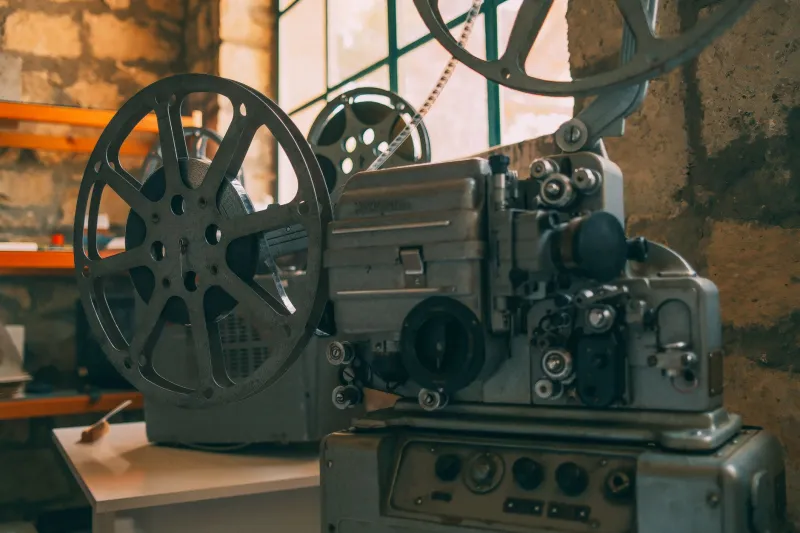
Cinema has always been a mechanical process pretending to be a dream. And like any machine, it breaks. What's fascinating — and honestly a little eerie — is how often those breaks end up being the most human thing on screen.
The Scratch That Stayed
Let's start with something physical. Film stock is fragile. Dust, heat, a careless splice — any of it can leave a mark. For most of film history, a visible scratch on the print was a projectionist's nightmare and an editor's headache. But there are cases where those scratches got baked into the master, distributed with the film, and eventually became inseparable from the viewing experience.
David Lynch's work is probably the most famous territory here. Lynch has spoken openly about his love for film imperfection — the flicker, the grain, the occasional anomaly that reminds you you're watching light projected through celluloid. In Eraserhead, the deliberately degraded image quality isn't just an aesthetic choice; it's load-bearing. The texture of the film is the anxiety of the film. When you try to watch it cleaned up, something essential evaporates.
But Lynch is a special case because he courts the glitch. More interesting are the directors who didn't — and got something extraordinary anyway.
When the Light Goes Wrong
Lighting mistakes are among the most common technical errors in filmmaking, and also among the most invisibly corrected. A reflected boom mic shadow, a blown-out window that was supposed to be exposed properly, a practical lamp that flickered when it shouldn't have — these get fixed in color correction or quietly reshot. Except when they don't.
There's a scene late in The Shining where the light in the Overlook Hotel does something slightly wrong — a practical source behaves inconsistently, creating a faint pulse that shouldn't be there. Kubrick, famously obsessive, almost certainly knew. Whether he chose to leave it or simply decided the cost of fixing it outweighed the result is debated. But watch that sequence knowing it's there, and the effect is unsettling in a way no intentional light cue could quite replicate. The hotel feels genuinely unstable. The environment itself seems to be malfunctioning.
That's the strange alchemy of the unintended glitch: it operates below the level of conscious filmmaking craft, which means it also operates below the audience's defenses.
Audio Ghosts
Sound is where technical imperfection gets really interesting, because our ears are wired differently than our eyes. We notice visual errors analytically — we clock them, we identify them, we move on. But audio anomalies burrow in. A low-frequency hum, a room tone that shifts slightly between cuts, a vocal take with just a touch of distortion — these register emotionally before they register intellectually, if they register at all.
The lo-fi recordings in films like Beasts of the Southern Wild or early Terrence Malick work aren't always accidents, but they blur the line between intentional roughness and genuine limitation. When Hushpuppy's voice occasionally clips in Beasts, it doesn't read as a mistake — it reads as desperation, as a child's voice straining against a world too large for her. Whether that was planned or simply preserved, it doesn't matter. It works.
More classically, there are the audio glitches in Apocalypse Now — a film so technically chaotic during production that distinguishing intentional distortion from genuine error is nearly impossible. That ambiguity is part of what makes the film feel unhinged in the right way. You're never quite sure if the sound design is brilliant or barely controlled, and that uncertainty mirrors exactly what Willard is experiencing on the river.
The Philosophical Problem with Perfection
Here's where things get a little uncomfortable for the restoration crowd: if a technical glitch becomes integral to a film's emotional identity, what happens when you fix it?
Digital restoration has given us extraordinary gifts. Damaged films have been recovered. Color has been brought back to prints that had faded to pink. Entire sequences lost to nitrate decay have been reconstructed. That work is genuinely important, and nobody serious argues against it.
But there's a version of restoration that tips into something else — a kind of aggressive smoothing that irons out not just damage but character. When grain gets scrubbed, when contrast gets normalized, when the slight flicker of a projector gate gets stabilized into a perfectly steady image, something changes. The film becomes more correct and less alive.
This isn't a new argument. Photographers have been having it about darkroom printing for decades. Musicians have been fighting it since digital recording made every performance fixable. The question cinema has to answer is: at what point does fidelity to the artifact become more important than fidelity to the experience?
What the Glitch Actually Does
The reason technical imperfections can become emotionally powerful isn't random. It comes down to what they communicate, even unintentionally.
A scratch on the film reminds you that the image is physical, that it was made by human hands and machines, that it has a history. A lighting error creates instability in a frame that was supposed to be controlled, and instability is one of the most primal things cinema can generate. An audio anomaly breaks the fourth wall of sound design — suddenly you're aware of the recording, which means you're aware of the gap between then and now, between the people on screen and the moment you're watching.
All of these things make the film feel real in a way that perfect technical execution sometimes doesn't. Perfection, paradoxically, can create distance. It signals total control, and total control signals safety. Glitches signal the opposite.
The Frame That Flickers
This site is called Flickerings for a reason. That word — flicker — is fundamentally about imperfection. Film projected at 24 frames per second creates the illusion of motion through a series of still images and brief moments of darkness between them. The brain fills in the gaps. Cinema has always been a collaborative hallucination between the technology and the viewer.
The glitch, at its best, is just a more visible version of what's always been happening. It's the seam showing. And sometimes the seam is the most honest thing in the room.
Next time you're watching something and a weird shadow crosses the frame, or the audio does something slightly off, or the image stutters for half a second in a way that might be intentional and might not be — sit with it before you dismiss it. There's a chance you just caught the film being more itself than it meant to be.