The Loudest Thing in the Room Is Nothing: Cinema's Most Powerful Silences
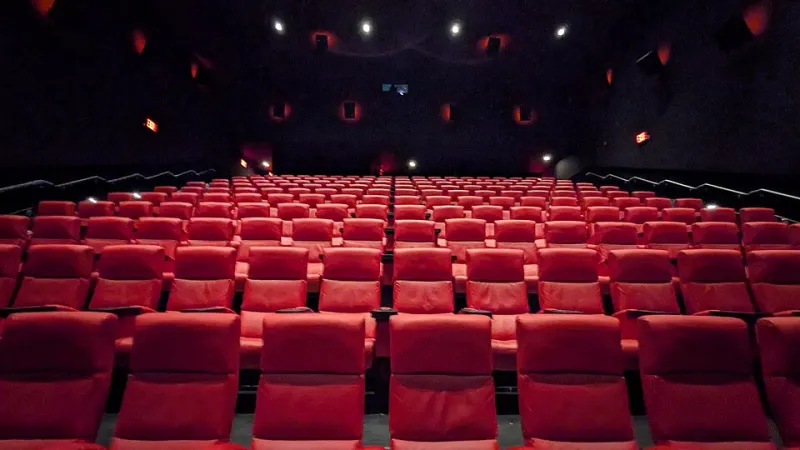
Photo: Eden, Janine and Jim from New York City, CC BY 2.0, via Wikimedia Commons
There's a scene near the end of Past Lives where Nora and Hae Sung sit in the back of a cab, heading to the airport. They haven't seen each other in over a decade. They've spent the last few days walking the streets of New York, circling the life they didn't have together. And now it's ending. Again.
They don't say much. The silence between them does most of the work. And if you saw that film in a theater — which is really the only way to see it — you probably heard people around you quietly coming apart. Not because of what was said. Because of what wasn't.
Silence in film is a craft. And in a media landscape that seems allergic to a single unscored, unspoken beat, the directors who still wield it well are doing something genuinely radical.
The Urge to Fill Every Gap
Modern Hollywood has a noise problem. Not just in terms of action sequences and Dolby Atmos speaker systems, though sure, those too. The deeper issue is a fundamental discomfort with empty space — a reflexive need to fill every emotional beat with either dialogue that explains the feeling or a score that underlines it in thick marker.
You can trace part of this to test screening culture, where moments of silence often get flagged as "slow" or "confusing" by audiences who've been trained to expect constant stimulation. Studios respond by adding music, punching up dialogue, cutting the pauses. The result is films that tell you exactly how to feel at every moment, which is another way of saying films that don't trust you.
Silence, by contrast, demands something from the audience. It asks you to bring your own emotional intelligence to the screen, to sit inside the discomfort or the tenderness or the grief without a safety net. That's harder. It's also, when it works, incomparably more affecting.
Daniel Plainview and the Space Between Words
Paul Thomas Anderson's There Will Be Blood is a film that understands silence as a form of violence. Daniel Day-Lewis's Daniel Plainview is a man who uses language strategically — the folksy salesman patter, the investor reassurances, the sermons of ambition — and the moments when he goes quiet are the moments you should be most afraid.
The film's most devastating sequences aren't its famous, quotable monologues. They're the pauses before them. The way Plainview watches Eli Sunday with absolute stillness before unleashing something terrible. The long, wordless stretches in the third act where you understand, without any character telling you, that this man has become something that cannot be walked back.
Anderson doesn't score those silences into submission. He lets them sit there, ugly and real. And the effect is that you feel Plainview's menace in your chest, not just your head.
Past Lives and the Silence of Unlived Futures
Celine Song's debut feature works differently — its silences are tender rather than threatening, but no less precise. The film is essentially a meditation on the paths we don't take, and Song understands that grief over an unlived life is almost impossible to articulate. So she often doesn't try.
The cab scene mentioned earlier is the obvious example, but the whole film is built on pauses. Video calls that end with a long look before someone finally waves goodbye. A kitchen moment between Nora and her husband Arthur where everything true about their relationship is communicated in glances and quiet. A park bench scene where Nora and Hae Sung sit in comfortable, aching silence and you understand their entire shared history from the way they don't fill it.
Song has talked about how she wanted to make space for the audience's own memories of people they've lost to time or distance. That only works if she leaves the space open. The minute you score it or explain it, you've colonized the audience's emotional response. The silence is the invitation.
What Silence Actually Communicates
Here's what's interesting from a craft perspective: silence isn't the absence of communication. It's a different register of communication, one that often carries more complex information than speech can.
When two characters fall silent after a difficult exchange, that silence can simultaneously convey exhaustion, unspoken love, suppressed rage, and resignation — all at once, all in tension with each other. Dialogue, by its nature, has to pick a lane. You can't say three contradictory things in the same sentence without it becoming a jumble. But a held look, a turned-away face, a hand that almost reaches out and doesn't — those can hold contradictions comfortably. That's where silence earns its keep.
Directors like Kelly Reichardt have built entire careers on this principle. Films like Wendy and Lucy and First Cow move at a pace that modern multiplex audiences sometimes find challenging, but the emotional accumulation they achieve through patient, quiet observation is extraordinary. By the time something significant happens in a Reichardt film, you've been living inside these characters' silences long enough that you feel it in your bones.
The Audience Has Changed (But Also Hasn't)
There's a popular argument that modern viewers — especially younger ones raised on social media and short-form content — have lost the patience for silence in film. I'd push back on that pretty hard.
The success of Past Lives, All Quiet on the Western Front, The Whale, and other deliberately paced, quiet films in recent years suggests that the appetite for stillness is very much alive. What's changed is the context in which people encounter these films. A movie that breathes and pauses feels different on a phone screen than it does in a dark theater where there's nowhere else to look.
This is part of why the theatrical experience still matters — maybe more than ever for a certain kind of film. Silence in a theater is a shared experience. Two hundred people choosing not to look at their phones, not to whisper, just sitting inside a moment together. That collective stillness amplifies everything. The silence on screen meets the silence in the room and something larger happens.
Earning the Quiet
None of this is to romanticize silence as inherently superior to dialogue — that would be its own kind of snobbery. Great screenwriting is great screenwriting, and a perfectly constructed exchange can be just as emotionally precise as any pause.
The point is that silence has to be earned and chosen, not defaulted into. The directors who use it well — Anderson, Song, Reichardt, Hirokazu Kore-eda, early Sofia Coppola — understand that quiet moments only land if the surrounding film has built the trust and context to support them. You can't just cut out dialogue and call it artistry. The silence has to mean something specific.
When it does, though? When a film earns the right to go quiet and then actually does it? That's when the screen stops being a screen and starts feeling like a window into something true.
And you walk out of the theater carrying it with you, this thing that was never said.