Someone Has to Thread the Reel: The Quiet Vanishing of America's Last Human Projectionists
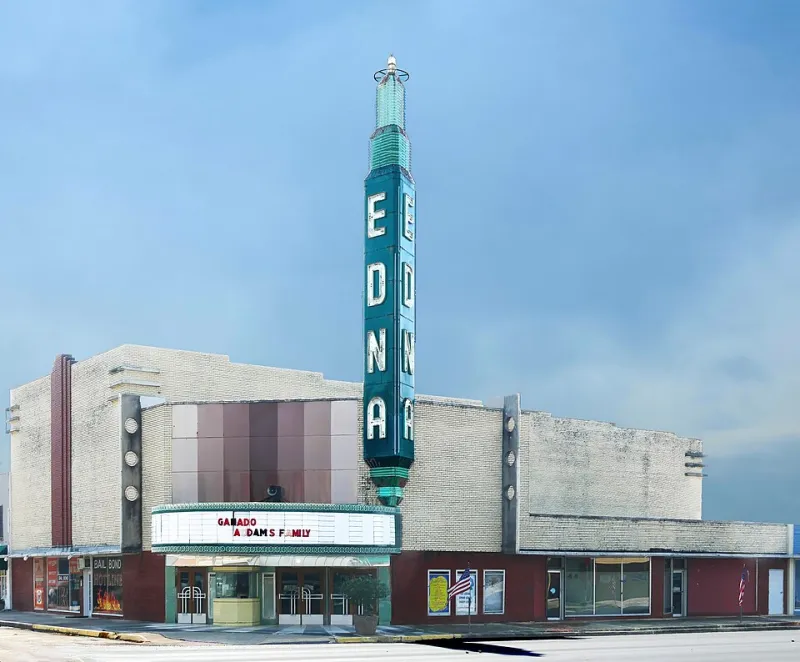
Photo: Jim Evans, CC BY-SA 4.0, via Wikimedia Commons
There's a moment, if you've ever stood in a real projection booth, that rewires how you watch movies forever. The projector is humming at 24 frames per second. The film itself is moving through the gate in gentle loops, and you can hear the optical track reading the soundtrack like a needle on a record. Someone did that. A person, with hands, threaded that machine.
Increasingly, nobody did. The booth is a server rack now. The movie arrived encrypted on a drive or, more likely, sits in a cloud queue waiting for a showtime trigger. The last human touch the film receives before your eyes might be a studio intern clicking "render."
The Switch Happened Faster Than Anyone Talks About
Digital cinema didn't creep in — it swept. Between roughly 2009 and 2015, driven by the 3D boom and the upfront economics of Avatar, American theaters swapped film for digital projection at a pace that would've been unthinkable a decade earlier. Studios saved a fortune on prints. Exhibitors saved a fortune on labor. A single operator could now run a dozen screens from a laptop, and eventually nobody ran them at all.
The projectionist, once a licensed skilled trade with union halls and apprenticeships, became a button-presser, then a ghost. The booths that were built with windows, workbenches, and splicing tables got hollowed out or walled off. In some multiplexes, the projector hangs from the ceiling above the audience like a ceiling fan.
Nobody held a funeral. The profession just quietly exited the frame.
What a Human Hand Actually Does to a Movie
The easy argument for projectionists is mechanical: film breaks, bulbs burn out, focus drifts, and a person in the booth catches these things in real time. That's true, but it undersells the deeper loss.
A projectionist is the last member of the filmmaking team. They're the final quality check, the final performance. A good one knows their screen the way a guitarist knows their amp — where the edges go soft, how the arc lamp behaves at hour three, which reel change cues land slightly early. The old two-reel changeover, with its cigarette burns flashing in the upper right corner of the frame, wasn't a flaw. It was a heartbeat. You could feel the movie breathing, feel that it was a physical thing passing through a physical machine on its way to you.
There's also something more intangible. Audiences at repertory houses — the New Beverly in Los Angeles, the Music Box in Chicago, the Dryden Theatre in Rochester, the Nitehawk in Brooklyn — will tell you that a 35mm print looks alive in a way that's hard to name and impossible to fake. The grain breathes. The color shifts. It's slightly imperfect, and the imperfection reads as presence. Digital is flawless, and flawless can feel like nothing.
The Keepers of the Flame
Here's the good news: the art didn't die. It retreated.
Across the country, a loose network of repertory cinemas, film archives, and volunteer projectionists has turned 35mm into something like live theater. These are people who learned to splice, to rewind, to read a cue mark, to build a print back up after it snaps at the worst possible moment. Some apprenticed in multiplex booths before the switch. Others came to it deliberately, treating projection as an extension of cinephilia — if you love the movies, why wouldn't you want to be the one who brings them to life?
Film festivals have become unlikely sanctuaries. The Telluride Film Festival still runs a famously all-film program. Cinematheques and archives treat every screening as preservation in public — a print checked, cleaned, and shown the way it was meant to be shown, at the correct frame rate, on a screen big enough to swallow you.
And there's a growing audience for it. Younger viewers, raised entirely on streaming, line up for film-only screenings the way vinyl collectors line up for pressings. The phrase you hear over and over in the lobby is some version of: I've seen this movie ten times. I've never actually seen it before.
What We Gave Up for Convenience
Let's be honest about the trade. Digital projection is reliable, consistent, and cheap. It made day-and-date global releases possible. It kept a lot of marginal theaters alive. No one seriously wants to go back to scratched prints of a second-run Jaws.
But something was traded away, and it's worth naming: accountability. When a movie passes through human hands, someone is present. Someone notices when the sound drops out, when the image jumps, when the shutter is off. Automation has no pride. The default failure mode of the modern theater isn't a broken film — it's a slightly wrong one, shown correctly enough that nobody complains, because the only person who could complain from inside the machine no longer has a chair in the booth.
Cinema has always been a collaboration between the screen and the room. The projectionist was the hinge between them. Losing that isn't nostalgia. It's losing a link in the chain of custody between a filmmaker's intent and your Tuesday night.
The Last Frame
The projectionists who remain — threading film by hand in converted vaudeville houses and college towns and one-screen main streets — aren't fighting progress. They're guarding something progress doesn't have a replacement for: the knowledge that movies are objects, that light is physical, and that for 120 years, every image anyone ever fell in love with arrived on screen because someone stayed late in a dark room to make sure it got there.
Catch one of these screenings while you can. Sit through the changeover. Hear the projector working. Then ask yourself whether the movie felt different.
It did. Someone was in the room.