Four Walls, Full House: How the One-Room Movie Quietly Took Over Adult Drama

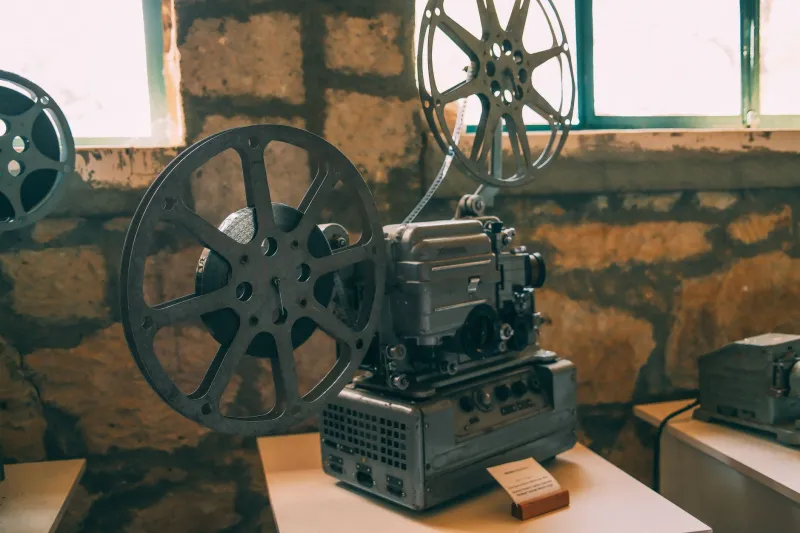
Photo: thesandiegomuseumofartcollection, Public domain, via Wikimedia Commons
There's a certain kind of movie that used to get made all the time and now arrives like a small miracle: a handful of adults in a room, talking, until something breaks.
In 2026, that movie is having a moment — not because anyone in Hollywood decided it was artistically noble, but because it's one of the few things that can still get financed. Location costs are brutal. Shooting days are shorter. Streamers want contained productions they can schedule and budget without a small army. And so the single-setting film, once treated as a calling card for first-time directors, has become the most reliable real estate in adult drama.
I think that's good news, and not for the reason people usually give.
The Economics Are Not the Interesting Part
Yes, one room is cheap. One set means no company moves, no permit wrangling across five boroughs, no second-unit driving shots of a car that exists only to establish geography nobody remembers. It means the money goes to the people on camera and the words in their mouths instead of a unit manager's spreadsheet.
But cheap isn't a virtue, and plenty of cheap movies are unwatchable. The reason the single-location film is quietly carrying grown-up storytelling right now is that it removes the two things that have been quietly strangling mid-budget drama: scale and escape.
You can't cut away to a montage of the city at dusk. You can't introduce a new character at a party. There's nowhere to hide, for the filmmaker or the audience. Everything has to happen in the room, which means everything has to actually happen.
The Pressure Cooker Effect
Put four people in a space with no exit and you get one of two things: theater, or a movie. The difference is the camera.
A filmed play plants the viewer in the best seat in the house and leaves them there. A great single-location film treats the camera as a fifth character in the room — one with opinions. Sidney Lumet's 12 Angry Men (1957) is the textbook case: the lens starts wide and gets longer and tighter as the room gets hotter, so the space itself seems to shrink. By the end you're in a close-up on a sweating man's face and you can feel the walls.
That's the whole game. Blocking isn't decoration in a one-room film; it's plot. Who stands, who sits, who crosses to the window, who refuses to move — every inch of floor is a line of dialogue. When it works, a character walking three feet across a room lands harder than a car chase.
A Short History of Getting It Right
We're not inventing anything here. Rope, Rear Window, Who's Afraid of Virginia Woolf?, Glengarry Glen Ross, My Dinner with Andre — the tradition is long and the hits are loud.
The more recent wave is what's interesting. Mass (2021) puts four parents in a church meeting room and lets two hours of conversation do what a courtroom drama would need twelve locations to accomplish. Sanctuary (2022) turns a single hotel suite into a class war. The Humans takes one apartment and makes it feel like a haunted house. One Night in Miami fits four legends into a motel room and never once feels cramped.
Each of those films had a choice to make and made it the same way: trust the room.
The Failure Mode Nobody Warns You About
Here's the part that separates the good ones from the ones that feel like a filmed workshop production. Bad single-location movies mistake confinement for drama. They leave the camera parked, they let scenes run past their usefulness, and they treat the walls as a budget line rather than a dramatic engine.
When the walls start showing, audiences feel it immediately. The room stops being a place and becomes a set. You can almost hear the crew holding their breath between takes.
The fix is almost always the same: the camera has to want something. It has to move because a character moved it, or refuse to move because a character won't let it. A static frame in a small film isn't neutral — it's a statement, and if the statement is 'we ran out of setups,' the audience knows.
Why Grown-Up Stories Fit in Small Rooms
Adult drama is about people negotiating with consequences. That's inherently a small-room subject. The divorce, the confession, the accusation, the apology — none of it happens on a rooftop in a rainstorm. It happens at a table, in a kitchen, in a car in a driveway with the engine off.
The one-room movie simply refuses to pretend otherwise. It strips out the geography that used to let filmmakers avoid the hard part, and it asks three or four performers to do the thing that made us love movies in the first place: hold a frame and be a person in it.
So yes, in 2026 the single-location film is partly a response to money getting tight. But the best of them aren't surviving the constraint. They're using it. And when a whole genre of grown-up storytelling starts getting made again because a room is affordable, that's not a compromise — that's a door opening.